
In this series, I’ll be working my way through Ursula K. Le Guin’s Earthsea works and analyzing her prose chapter by chapter. Spoilers follow.
Chapter 8: The Children of the Open Sea
Length: 15 pages, 106 paragraphs
Setting: Balatran
Characters introduced: Bluecrab, Albatross, the Chief the the Children of the Open Sea
I have compared parts of the Earthsea books to The Lord of the Rings before. Sometimes I wonder if I’m reaching, and this is one of those times. I think the first three books of Earthsea are very much in conversation with Tolkien. I do not know how often that was at the forefront of Le Guin’s mind in the writing.
Nevertheless, the visit with the Children of the Open Sea reminds me of both Frodo’s stay in Rivendell in The Fellowship of the Ring and of the hobbits’ visit to Tom Bombadil in the same book. I think the similarities to Rivendell are obvious enough, a battered character on a harrowing journey wakes up in an unfamiliar place and takes counsel from the locals and heals before the journey continues. Rivendell is not, of course, the first or last place in fiction where heroes have gone to heal.
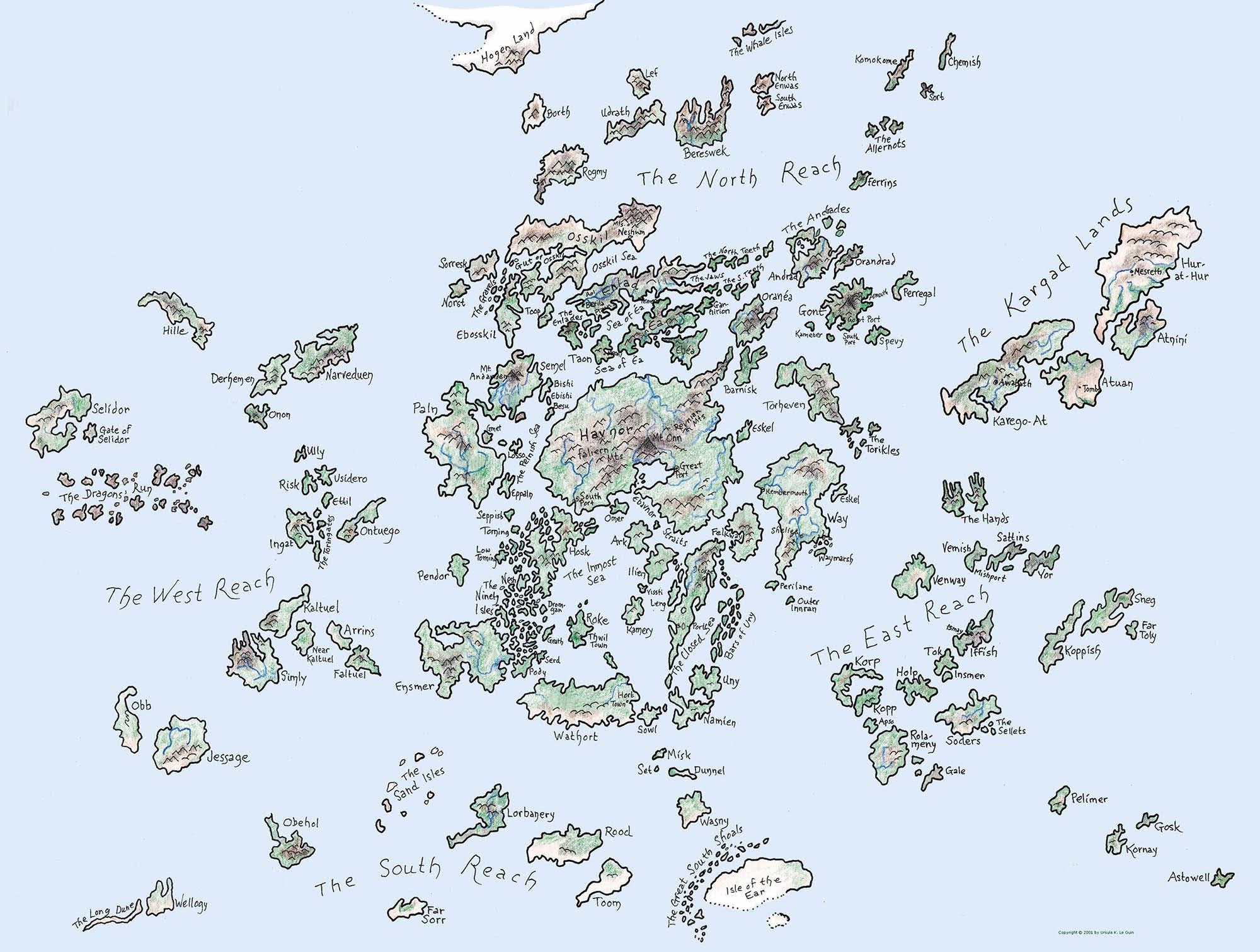
The Bombadil aspect is perhaps the greater stretch. Bombadil feels, quite intentionally, out of place in Middle Earth, a relic of another genre. The Children feel quite at home in the Earthsea books, but they do live outside the map of Earthsea we’ve been given. As Bombadil masters the forest, the Children live in harmony with the sea.
But those are really, to my mind, surface things. I draw the comparison to Bombadil because I suspect Le Guin does. When we get a peak inside Arren’s mind, we learn that he views this visit as something disconnected from the whole, unrelated to what had come before and what will come next.
Now, I think Le Guin works to prove this false, but I think she’s calling out the criticism of the Bombadil sequence. This moment of healing (and we get a few of those moments of healing and light studded throughout this narrative) is important for the rest of story though our protagonists learn nothing new about the threat.
It’s worth noticing that Arren and Ged can find rest, healing, and joy here with people living in harmony with nature, doing only what they must and so totally disinterested by the call toward immortality.
A final small note on this chapter: This is the first chapter in three books where my focus on names seems upended. Usually, when we get a named character, they’re meant to be honed in on, but Bluecrab and Albatross are split-second background characters. The nameless chief is the central mover of this chapter.
This accomplishes a couple of things. It shows Arren’s time among them as being a richer experience than we have time to get into on the page. He has friends and knows them better than the chief. I think it also, in this context, allows the chief to stand out as a starker figure. Rather than too incidental to name, he is perhaps too elusive to name.
But maybe I’m over-reading. Until next time!
 chasetriesagain.com