
In this series, I’ll be working my way through Ursula K. Le Guin’s Earthsea works and analyzing her prose chapter by chapter. Spoilers follow.
Chapter 6: Lorbanery
Length: 16 pages, 144 paragraphs
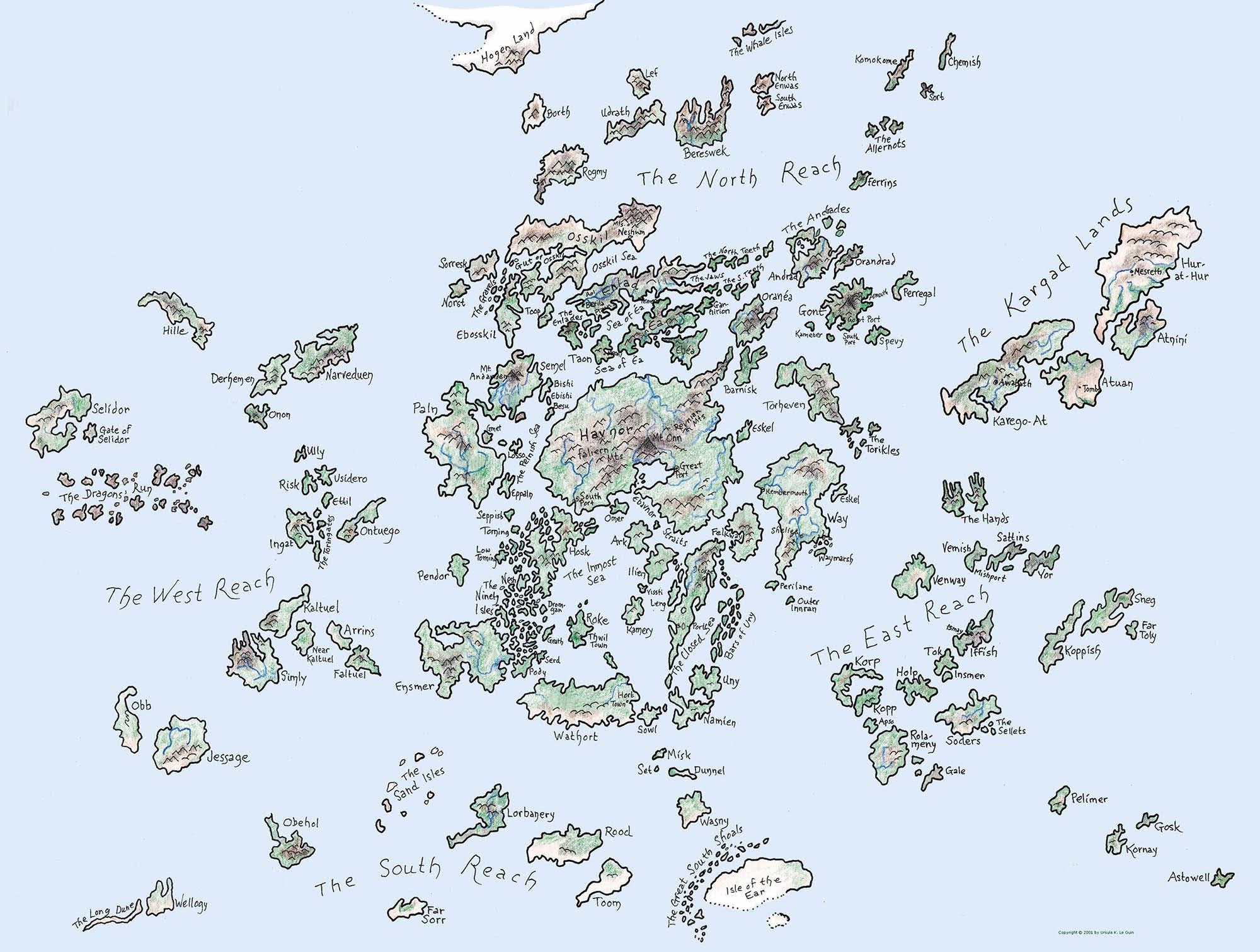
Setting: Lorbanery
Characters introduced: Akaren, Sopli
I can’t help but wonder if the reason Lorbanery is noted for its dyed silks is so that Le Guin could have a character in a book about an unbalance between life and death say that he cannot dye.
This chapter screams Hayao Miyazaki to me in a couple of ways, and it’s no wonder he wanted a crack at putting Earthsea on screen. After the dread at Hort Town, the squabbling, ill-tempered residents of Lorbanery feel like comic relief still tinged with horror. It brought to mind Chihiro’s introduction to the spirit world in Spirited Away. The focus on the symbiosis of craft and the natural world also had a hint of Miyazaki.
Lorbanery’s disorder felt eerily familiar in a way I didn’t immediately understand in Hort Town, though looking back I see some social commentary I think I missed.
There is someone promising practitioners of the art-magic a path to immortality, and whatever this someone is doing is upsetting the balance of the world, killing magic and the memory of magic. It has left sorcerers half mad and everyone else listless, directionless.
On Wathort, this manifests as people stupefied with use of poisonous drugs and random violence. On Lorbanery, they lose their craft and slip into joyless, circular bickering. The folks on Lorbanery blame the young, the weather, the outsiders, and each other.
All the while, the source of this societal decay is the fear and greed of a select few and especially a specific person.
Until next time.
 chasetriesagain.com