
Monster Mondays began as a series of posts inspired by James Jacobs’ 10 goblin facts written for Pathfinder. Now, I’m creating new lore, encounters, unique NPCs and more for creatures in the Monster Manual. The goal is to provide habits, scene-setting tools, encounter hooks, and more variety, especially for monsters that don’t get quite as much love as dragons, beholders, mind flayers, and liches. For the month of October, I’m focusing my attention on the undead.
This week, we’re taking a look at mummies. The Monster Manual treats mummies as ritual-bound undead, wicked rulers or punished criminals bound to dark gods. This time, I really wanted to expand the concept beyond the confines of the existing lore.
The Monster Manual pulls from Hammer Horror-style depictions of the mummy, inspired by the destructive tomb-plundering of past archeologists. Consequently, its scope is quite limited and pulls primarily from Egyptian mummies. Mummification, both intentional and accidental, has been practiced all over the world.
I tried to bring some new mummies to the fore, giving a slightly broader view of the well-preserved dead.
Mummies
Not all mummies are the result of ornate rituals. Some are created by the confluence of natural and arcane powers. These mummies may be the result of ancient sacrifices or punishment for long forgotten crimes. Others are the result of lost travelers succumbing to the elements.
Undead Nature. A mummy doesn’t require air, food, drink, or sleep.
 Bog Mummy
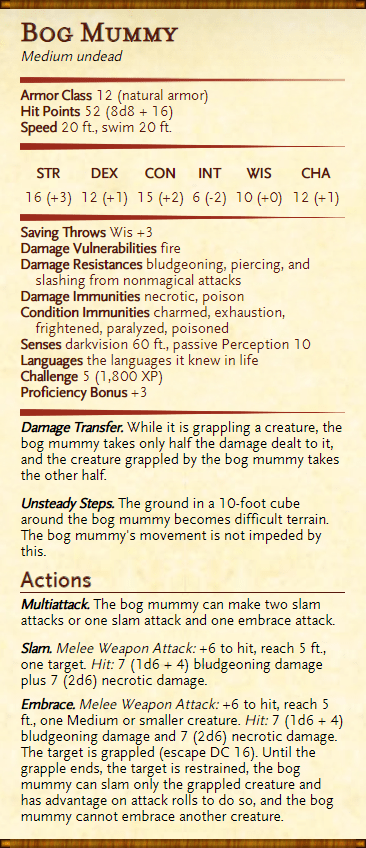
Bog mummies are the preserved remains of those who died in peat bogs. Their haunts are less extreme than those of other mummies, and local legends sometimes grow up around them in farming villages.
Well Preserved. Thanks to the peat bogs that create them, these mummies are unusually well preserved. Their skin is tanned by the bog and their faces may even show the last expression they wore in life. At rest, they may appear to be merely sleeping.
Shambling Horrors. When ancient magics reawaken a bog mummy, the truth revealed is far less peaceful. While the peat preserves skin, hair, and organs, the bones are desolved by their acid environs. Bog mummies shamble over the fields at night, skin and hair alike whipped by the wind, only the magic that animates them keeping them aloft.
Local Guardians. Bog mummies may be intentionally created to protect a treasure, a sacred grove, or even to serve as guardians of the villages they once lived in. Those who dare to bring harm to the person, place, or thing that a bog mummy protects may soon find themselves sinking into the moss and mud.
 Frost Mummy
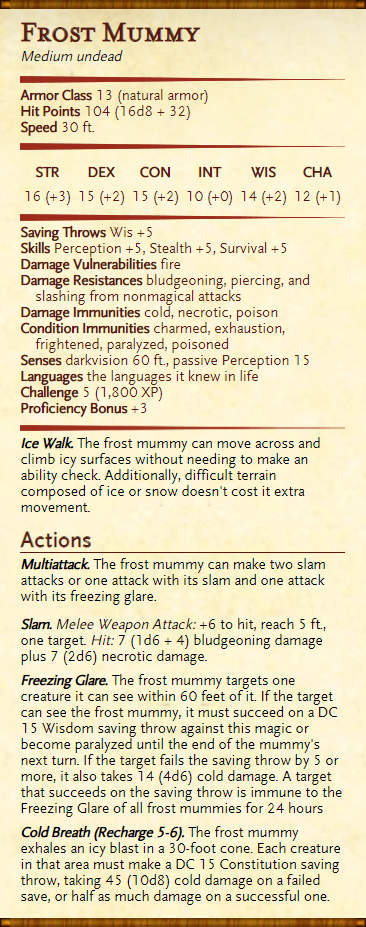
Frost mummies are the corpses of those who died in extreme cold. They dwell along frozen coastlines and roam the tundra. They are the nightmares of northern sailors and nomads alike.
Cold Fury. Frost mummies are filled with a bitter hatred of the living. The cold that killed them has embedded in them a frozen malevolence and they seek the destruction of any living beings that come within their sight.
Cunning Hunters. Frost mummies are more intelligent than most of their mummy ilk. They are quite capable of tracking and trapping their would-be victims. They will also seek to manipulate mortals through fear and mind games. Sailors tell tales of frosty corpses watching them from coastal cliffs as they sought shelter from winter storms.
Unlikely Allies. Frost mummies retain some memory of their life before they died. Bargaining with a frost mummy is no easy task, but their aid (or at least a temporary truce with them) might be earned by settling old debts or punishing the people that left them to die.
Adventurers sometimes seek the aid of frost mummies. Their knowledge of the territory they haunt is unmatched. If you can appease them, they make excellent guides. Others seek their aid in guarding treasures or settling debts of their own.
 Mummified Cat
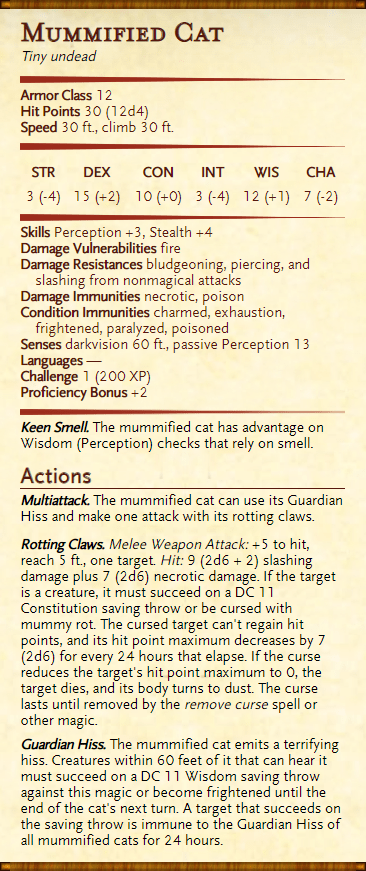
In some cultures, it is considered customary to mummify and entomb cats. Some are beloved pets, others unlucky strays given as sacrifice.
Feline Guardians. Regardless of their origin, mummified cats are believed to serve as guardians. Some are left to guard the dead. Others are enshrined within the walls of a house to bring good fortune to its inhabitants. Others still are believed to watch over young children and family pets for generations.
Design Notes
I started this process with bog mummies. I’ve been fascinated and inspired by bog bodies, the preserved remains of people who died or were buried in bogs. They’re really creepy, and to my mind, they translate into a monster that fits really nicely alongside giants and fairies and the fantasy Europe vibe that so much of D&D has.
Researching bog bodies to flesh out that concept guided me to read about and think about the similar frozen bodies found in some locations. There’s definitely some A Song of Ice and Fire in the frost mummy’s DNA as well as the draugr as depicted in The Elder Scrolls.
The mummified cat was a last minute addition. It was definitely more strongly inspired by the European practice of placing the bodies of cats in walls to bring a home good fortune. In fact, I hadn’t thought about the Egyptian feline mummifcation process until I was nearly done building them.
That’s all for now. You can find the prettified version of this content along with some mummy NPCs on GM Binder.
 chasetriesagain.com
1 Comment