
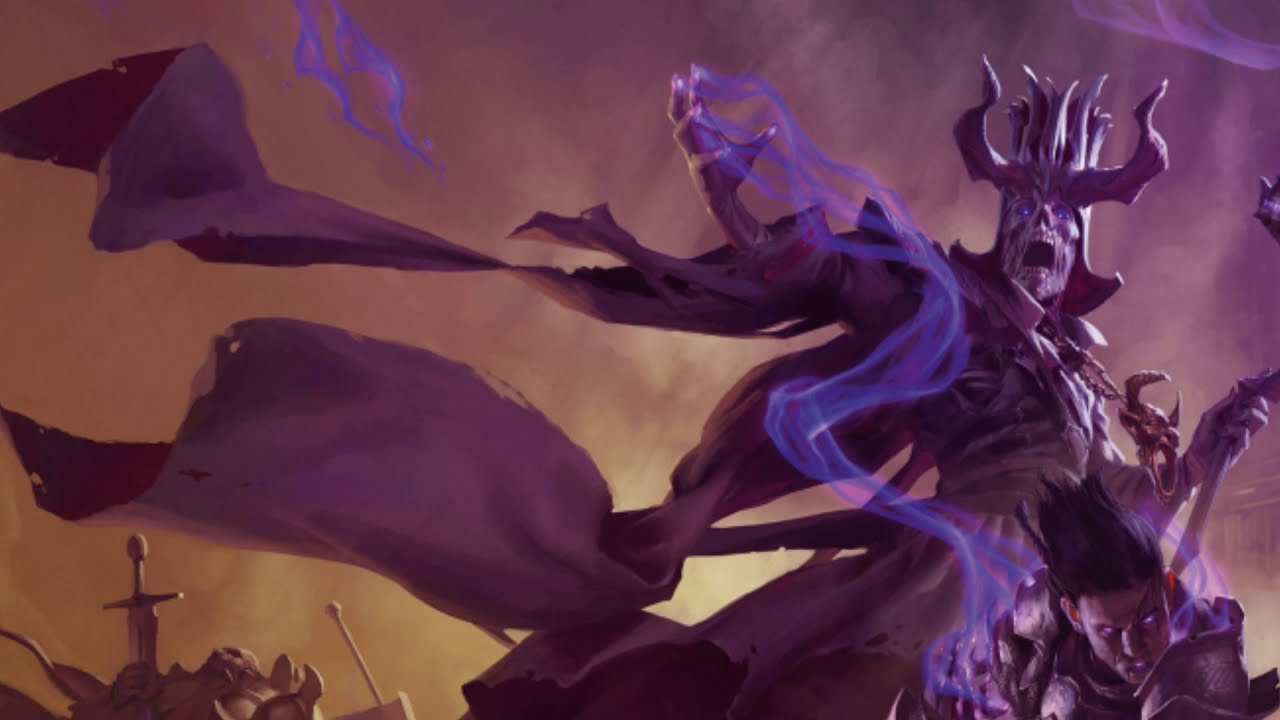
Monster Workshop is a weekly feature where I build new monsters or monster variants for Dungeons & Dragons. A new Monster Workshop drops every Wednesday. Throughout October, Monster Workshop gets in on the Month of the Living Dead action as I homebrew a bunch of undead from video games and other sources.
To kick-off the Month of the Living Dead workshop entries, I decided to turn the dry bones and Dry Bowser enemies from Super Mario into a couple of low CR undead. Translating them from a Nintendo platformer to pen-and-paper fantasy was a challenge, but I’ll get into that in the design notes.
Dry Bones
More intelligent and independent than many lesser undead, dry bones are skeletons animated with potent magical protections. The necrotic magic that causes them to shamble through tombs and graveyards also protects them from fire and gives them the power to reassemble themselves.
Undead Nature. A dry bones don’t require air, food, drink, or sleep.
Dry Bones Underling
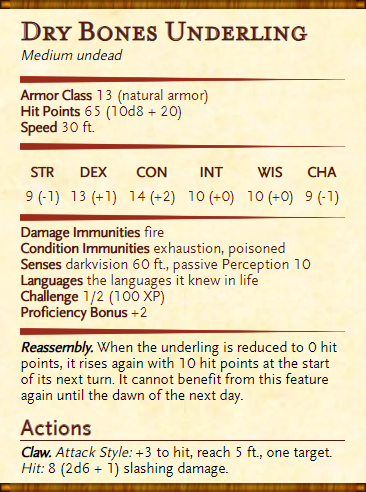 Dry bones underlings often serve as shock troops for undead armies. Under the leadership of dry bones taskmasters, underlings help break through enemy lines and cause chaos by reassembling after an apparent defeat.
Undead Amalgams. Dry bones are typically created from the bones of multiple creatures. There are no particular requirements for the source of the bones, but there must be a skull.
Uncanny Personalities. Dry bones underlings are unusual among lesser undead due to the presence of a distinct, new personality. An underlings personality may be influenced by the necromancer that summons it or aspects of the creatures it takes its bones from. They have a penchant for gallows humor.
Resourceful Soldiers. Even dry bones underlings may be put in command of other lesser undead thanks to their life-like intellect. Underlings are able to adapt to battlefield conditions and may even have interests beyond their duties.
Dry Bones Taskmaster
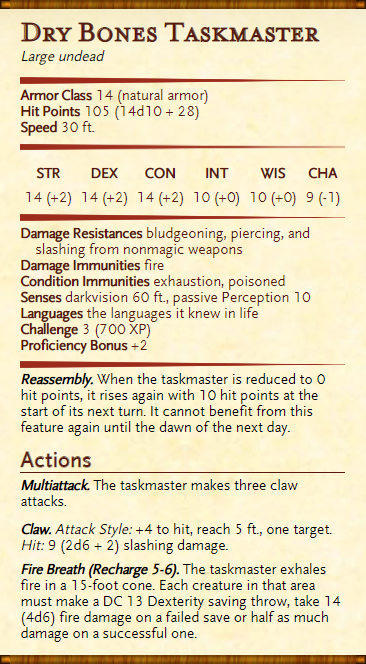 Taskmasters lead teams of dry bones underlings and other lesser undead. They serve as field commanders in battles and garrison fortresses. Some taskmasters even take control of their own undead armies to pursue power.
Draconic Minds. A taskmaster must have the skull of a dragon. This accounts for their greater power and fire-breathing prowess, but it’s also believed that the dragon’s personality is more likely to imprint upon the taskmaster.
Skeletal Vessels. Necromancers unable or unwilling to complete the rites of lichdom have been known to bind their minds to taskmasters, using them as a means of attaining immortal undeath.
Capacity for Treachery. Dry bones taskmasters are prone to powerful egos and may develop their own goals to pursue. Necromancers that employ taskmasters keep them on short leashes due to a tendency to betray their creators in pursuit of their own ends.
Design Notes
Mechanically, there’s a huge gulf between the dry bones’ platformer roots and the D&D combat system. Even a low CR monster that could always pop back up after being killed would be a nightmare to handle. The dry bones also don’t have much in the way of obvious offense. Like most Super Mario mooks with side-scrolling origins, all they really have to do is walk into you to do damage.
I think the reassembly trait gives the dry bones a taste of that “unkillable threat” frustration without going overboard. Used as a group, it could very nicely mimic that feel of the dry bones coming back over and over.
Dry Bowser gave me a bit more to work with in making the taskmaster. He breaths fire, he’s bigger. It’s not a lot more to work with, but I think it worked out.
Coming up with lore to make the dry bones statblocks at home in a fantasy setting was significantly more challenging than the rancor or chus, but I’m pleased with their place as hodgepodge undead with new intellects.
That’s all for now. You can find the prettified version of this article on GMBinder. Until next time!
 chasetriesagain.com
1 Comment