
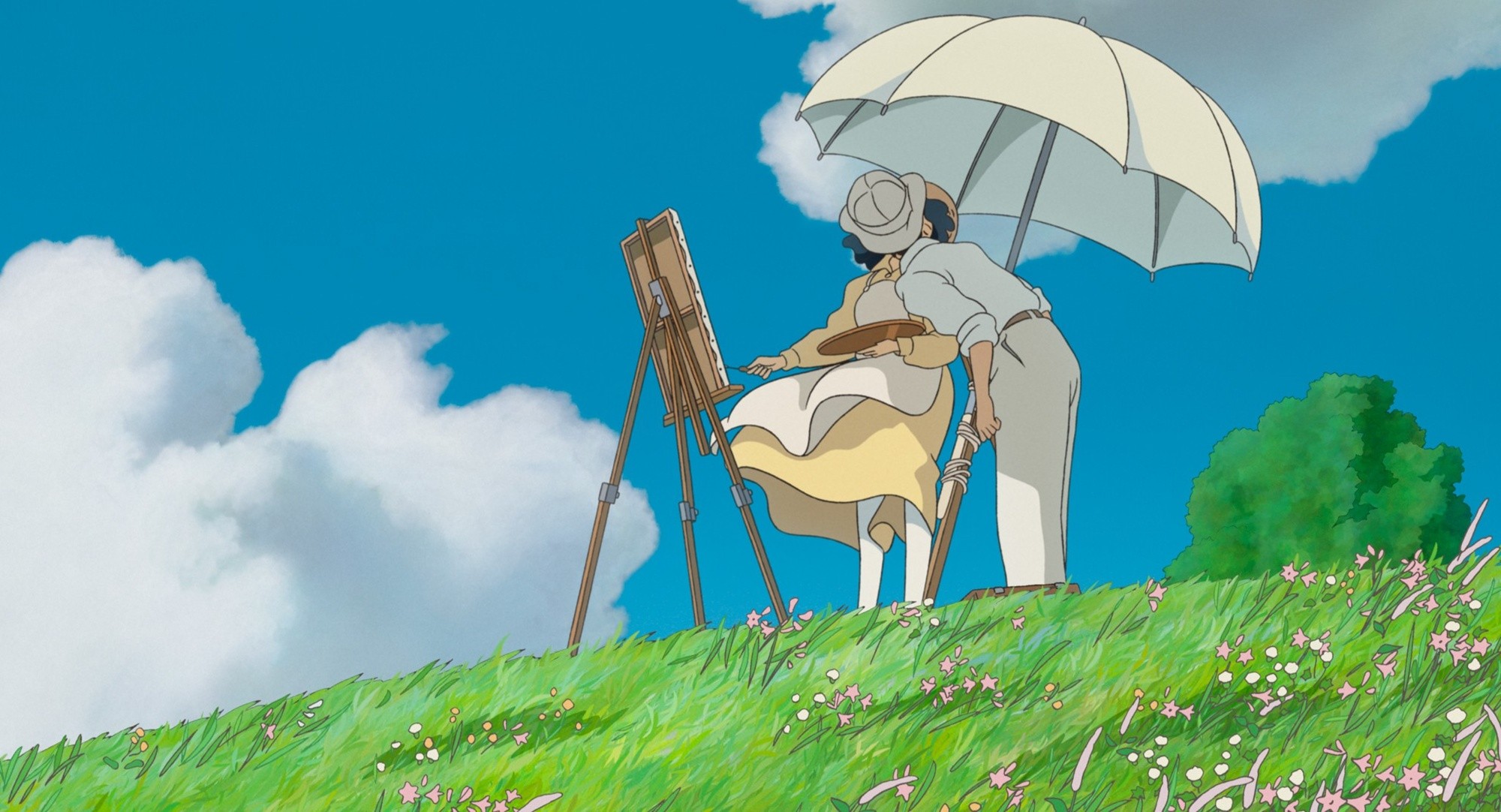
Title: The Wind Rises
Run time: 126 minutes
Released: 2013
Director: Hayao Miyazaki
Studio: Studio Ghibli
The Wind Rises is a highly fictionalized biography of Jiro Horikoshi, the engineer behind the Japanese Zero fighter plane used in World War II. It began as a manga of the same name, and it mixes Horikoshi’s life with the semi-autobiographical works of novelist Tatsuo Hori, including The Wind Has Risen and Nahoko.
Part of the making of The Wind Rises is captured in the documentary The Kingdom of Dreams and Madness. The movie is a meditation on what Miyazaki considers the cursed dream of flight. It is also a love story, an antiwar movie, a coming of age tale, and I suspect for Miyazaki it is also a little autobiographical.
In the documentary, he says animation is also a cursed dream. Miyazaki is not shy about his disdain for the culture that has grown up around anime, and he is also critical of his own work. I suspect that Miyazaki is using Horikoshi’s very real concern about his planes being used as tools of war to mirror his own real concerns about his animation fueling consumerist excess and obsession.
Also in the documentary, Miyazaki is struggling to draw the planes, and he complains about “Zero Otaku.” Some have called this hypocritical, but I think this requires some reflection on Miyazaki’s previous discussion of planes around the time of Porco Rosso. Miyazaki is interested in old planes because of what they represent. Their use is tragic to him, and he has no real use for the statistics about them. He is first and foremost interested in them as symbols of the freedom and beauty of flight.
The movie managed to draw the ire of the Japanese left and right for its political messages. The left felt that the movie was too dismissive of atrocities committed by the Japanese in Korea and China before and during WWII. The right felt that the movie was too antiwar and anti-nationalist.
Regardless, Miyazaki depicts the planes as a great achievement by the Japanese used for terrible, destructive ends. The three aviation engineers depicted in the movie, Horikoshi, Italian Giovanni Battista Caproni and German Hugo Junkers, are all shown to be antiwar. Horikoshi states that he only wanted to design beautiful airplanes, a stance his real world counterpart shared. The real Horikoshi called the war a hellish cauldron of defeat that Japanese leaders dragged the country into. Junkers was a socialist and pacifist in real life.
Miyazaki did not intend for The Wind Rises to be adapted for the screen. He wanted to do a sequel to his previous film Ponyo. Suzuki suggested The Wind Rises as an alternative, but Miyazaki didn’t believe it was suitable for children. It took another Ghibli employee to convince him of the project by arguing that children should be able to encounter concepts they’re not familiar with in movies. It was meant to be his last film, but he has once again returned to the studio for a film planned to debut in 2020.
The voice work on the film has a lot of interesting casting choices. Ghibli was struggling to find a voice for Horikoshi, and the joking suggestion to bring Neon Genesis Evangelion creator and former Ghibli animator Hideaki Anno became a reality. American Ghibli employee Stephen Alpert voices the German Mr. Castrop (the character design was based on him) in the Japanese dub while that role is taken over by director Werner Herzog in the English dub. The Wind Rises is also the last Ghibli film distributed by Disney in a partnership that lasted nearly two decades.
I have less to say about The Wind Rises than I had about Miyazaki’s other films. I think this is mostly because it’s Miyazaki’s least subtle film. If you want to know what Miyazaki had to say in The Wind Rises it’s all their on the screen for you. Tomorrow, I’ll wrap up my discussion of Miyazaki and then we’ll move on to the final director of the challenge. Until then!
 chasetriesagain.com
2 Comments