
Title: The Garden of Words
Run time: 46 minutes
Released: 2013
Director: Makoto Shinkai
Studio: CoMix Wave Films
The Garden of Words is aggressively short. Makoto Shinkai tells the story he’s there to tell, and then he ends it. Its visuals are lush, its characters are complicated and its storytelling utilitarian.
Takao Akizuki is 15, a high schooler with a neglectful mother, and he wants to become a shoemaker. He is mature for his age, keeping house, cooking and working a part-time job, but still naive about the adult world. His older brother is well-meaning but condescending, and his friends and classmates aren’t quite on the same wavelength.
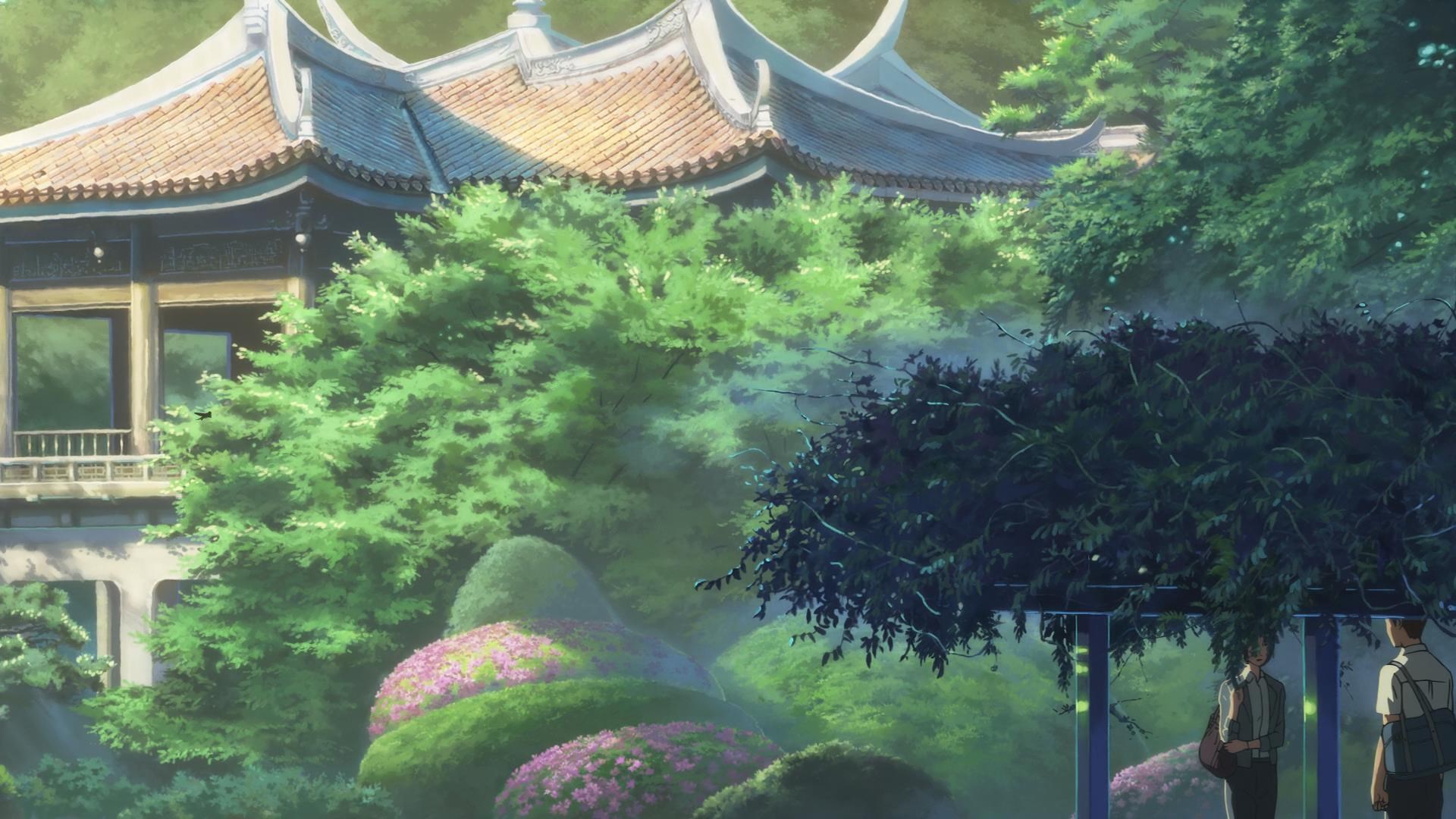
On rainy days he skips school or arrives late, spending at least part of his day at a gazebo in a beautifully drawn Japanese garden (based on Shinjuku Gyoen in Tokyo). While hiding out there one day, he meets Yukari Yukino, 27. Yukari is a lonely young woman, not quite at home in the adult world. She becomes a symbol of mysterious adulthood for Takao, and they strike up a companionship.
I’m not going to delve into the plot much simply because this is such a short piece. If you’re interested in that, you should watch the movie. Instead, I’m going to focus on some themes and motifs.
Shinkai created the movie as a sort of meditation on an old-fashioned Japanese conception of love. The traditional Japanese word for love can be written using the kanji for “lonely sadness,” and it can be interpreted as a desire to be alone with a person. Our protagonists find one another during a period of their lives where they both feel isolated, and for Takao this seems like the first opportunity he’s had to really connect with someone on a meaningful level.
Whether this lonely sadness they experience together is a form of romantic love or not is left (mostly) to the viewer’s imagination, but just about every detail of the film serves to highlight and reinforce this connection. They are the only characters we really get to know. There are only a handful of other named characters, and most of them have little screen time and few lines.
The Japanese garden they meet in is designed to feel removed from the outside world. The reality of the city is a distant background of skyscrapers. Entrances and exits along the garden path are obscured by trees and bushes. The only other characters we see entering the garden are background characters, and they arrive on a sunny day when Yukari is there alone. The rain itself serves as a sort of curtain drawn around the gazebo that makes it feel more intimate.
The rain, too, is a major player. Some have even called it the third protagonist of the movie. In addition to its role in transforming the environment, it tends to respond to the emotional tone of different moments in the film.
One other motif I haven’t seen discussed very much by Western reviewers is the use of Japanese poetry. This might be because they aren’t familiar with the cultural significance and history of Japanese poetry. I’m certainly no expert, but I had the great benefit of an English professor who was fascinated by it.
Yukari teaches classical Japanese literature, and after their first meeting, she gives Takao a tanka. The exchange of poems was a common feature of Japanese aristocracy in the not so distant past. Lovers exchanged short poems like tanka in the same way Western cultures exchanged love letters. There were appropriate themes and references and certain occasions when this was expected. There were also appropriate response verses. Takao eventually finds the appropriate response to her tanka in the oldest Japanese poetry collection, Man’yōshū.
The movie also makes frequent mention of “learning to walk.” Takao’s desire to make shoes for a living ties in with this theme, and the two protagonists learn to move forward in their lives because of their relationship. But I don’t have much to say about this idea that you wouldn’t gain just from watching the movie so I’m going to wrap this up. Until tomorrow.
 chasetriesagain.com
Awww, I feel like rewatching the movie now!
I want to concentrate on the love and poems you mentioned. Thank you!
LikeLiked by 1 person