
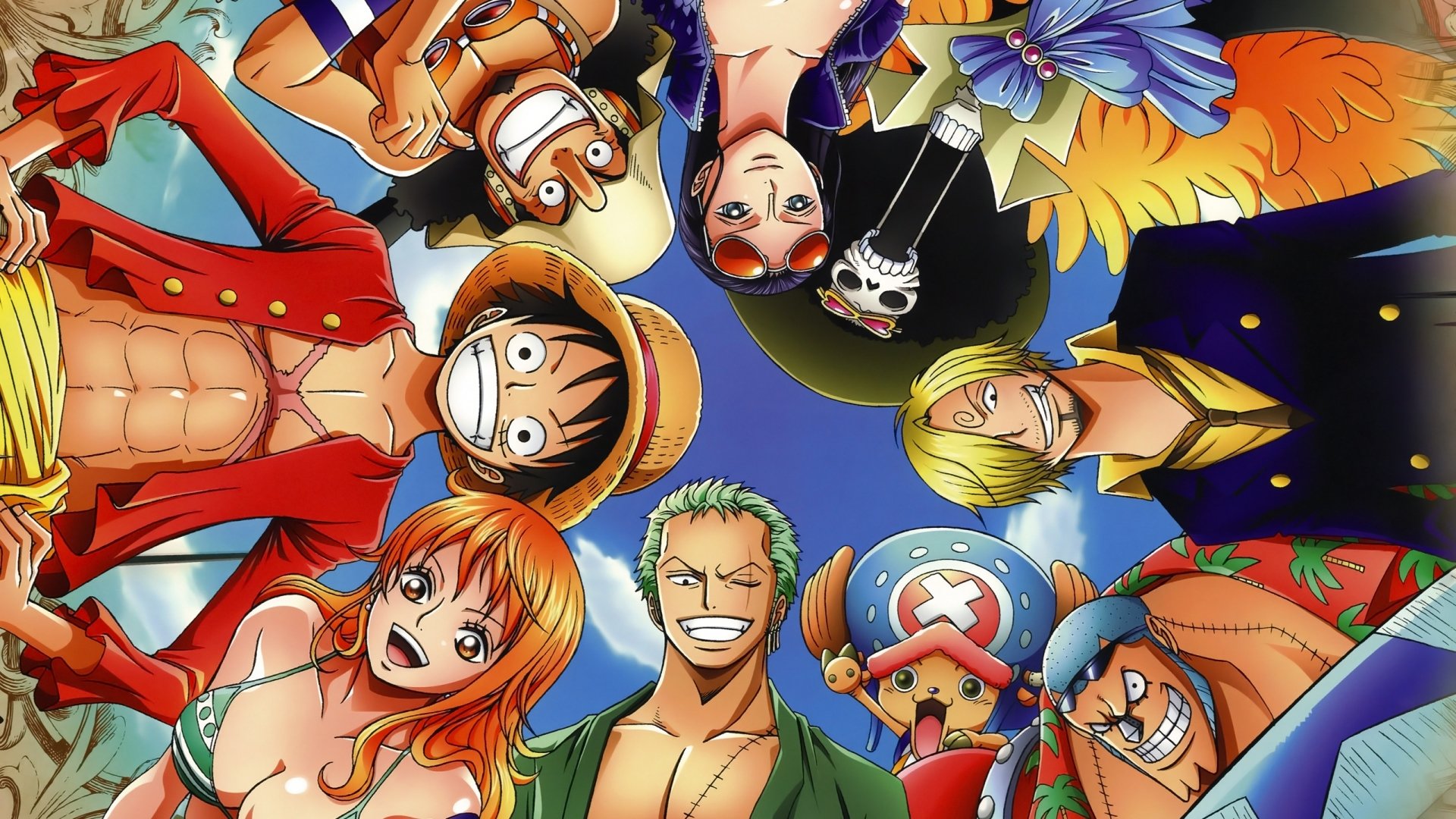
Once upon a time in 1996, Eiichiro Oda was working as an assistant to Rurouni Kenshin creator Nobuhiro Watsuki. He had been recruited into the world of Weekly Shōnen Jump when his work earned him second place in the Tezuka Award competition at the age of 17. Now 21, Oda was an up-and-coming artist having worked with Watsuki for about two years and been assistant to two other mangaka before that.
During this time, Oda began working on two separate pieces about pirates. Oda had loved pirates since he was a child when ’70s Nippon Animation series Vicky the Viking sparked his fascination. These two stories would be the seeds from which his life’s work would grow.
In 1997, One Piece would appear in the pages of Weekly Shōnen Jump and introduce the world to Monkey D. Luffy, a young man with the ability to stretch like rubber, and his ragtag crew of Straw Hat Pirates. The world of One Piece is one of vast seas and pirates of both the chaotic good and chaotic evil varieties. Even skimming the surface of the franchise, it’s clear that the world building has immense depth (though it doesn’t necessarily follow Tolkien’s best practices), and more importantly, so do its characters.
Luffy’s goal, like many other pirates, is to find legendary pirate Gol D. Roger’s treasure One Piece and become the King of the Pirates. Along the way, Oda builds a complex web of personal histories, factions, friendships, rivalries and grudges that might not be expected in a series aimed at young audiences with messages about friendship, hard work and optimism.
It is the first of Weekly Shōnen Jump’s Big 3, a set of wildly successful shōnen series that ran in the magazine at the same time, and it is the only one still running. Oda knew the ending when he started, and he first believed that the series would last five years. Now old enough to drink, Oda’s series consists of 89 volumes. It is the best-selling manga of all time, with 440 million copies sold worldwide as of May. It also holds the Guinness World Record for most copies published of the same comic book series by a single author.
Production I.G were the first to adapt the series into anime form, creating an OVA in 1998, but the still-running anime series by Toei wouldn’t kick off until 1999. 4Kids Entertainment was the first company to get the rights for American distribution, in a package along with other shows.
4Kids picked up the rights without screening it, and quickly realized it wasn’t aimed at the elementary school demographic they were chasing. So they did what any company focused on entertaining small children would do. They bludgeoned it to death with one of the worst localization efforts of the era. 4Kids held the license from 2004 until 2007. During this time, the show aired on the Fox Box and Toonami TV blocks before production halted in 2006.
Funimation would go on to pick up the license in 2007, and the show returned to Toonami until March 2008, six months before Toonami was first cancelled. Funimation continued to dub the show, and it returned to television in the U.S., once again on Toonami, in 2013. It left the block again in March 2017.
The ongoing anime includes 849 episodes and 13 movies. The franchise also includes light novels, OVAs, crossover specials, card games, video games, art books, a forthcoming live action TV show, a theme park, two restaurants and recreations of the ships used by the Straw Hats.
The real testament to the series and to Oda as a creator, I think, is Oda’s commitment to maintaining the quality of the series and to finishing the story he set out to tell. One Piece has been his life since he was 21. The bulk of his creative output at this point in his life is One Piece, and probably even once the series is done it will be One Piece. That kind of commitment to a single story is rare, and it must be a Herculean effort to maintain. I’m no Tolstoy, but I have written fiction before. even when (maybe especially when) you know what goes at the bottom of the page, all that space in the middle takes a lot of discipline to fill. That he’s produced a new chapter once a week almost every week for most of my life and half of his own is an incredible feat.
So that’s One Piece, the biggest and oldest and most continue-y-est of the Big 3. Over the next few days, I’ll cover Naruto and Bleach, too, probably with some other odds and ends thrown in for variety. Until tomorrow!
 chasetriesagain.com