
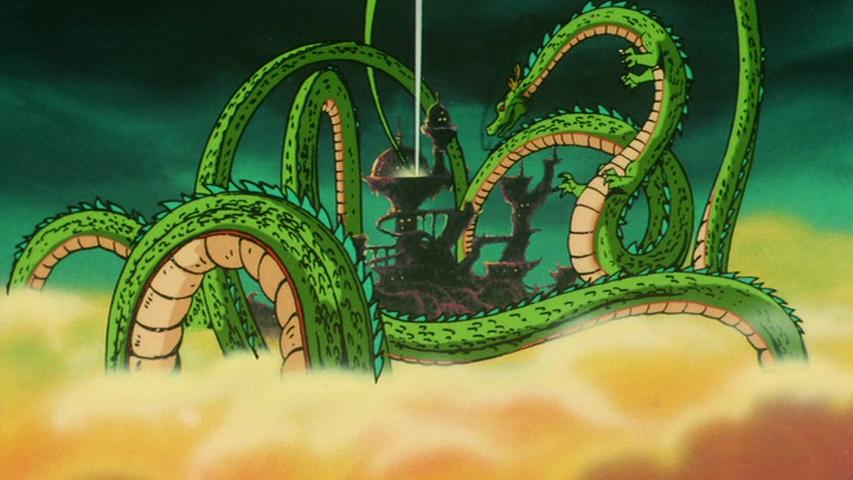
If you were an American kid in the late ’90s or early ’00s, the Dragon Ball franchise was, at the very least, something in your peripheral vision. The original anime adaptations of Akira Toriyama’s manga ran from 1986 to 1996 in Japan, but it was a significant part of the late ’90s anime boom for many kids because it aired on Toonami.
The series itself kicked off when Dragon Ball debuted in Weekly Shonen Jump in 1984. It ran until 1995. The original manga spanned 519 chapters. It spawned three spin-off manga series, 806 episodes of anime, 19 animated movies, three TV specials, over 90 video games, multiple card games and a veritable mountain of merchandise.
Dragon Ball wasn’t the first shonen fighter series, but it is a juggernaut of a franchise. Jump’s Big 3 are all shonen fighter titles built in the image of Dragon Ball. Dragon Ball began as a loose adaptation of the classic Chinese novel Journey to the West, and Toriyama decided to add in Jackie Chan-inspired martial arts as well. The environments were deliberately non-western, inspired instead by photos of China and other places. The titular Dragon Balls and the wish they grant if collected initially had no purpose except to give the characters a specific goal.
My favorite part of Dragon Ball is Toriyama’s world building methodology. He introduces what he thinks will be cool or useful for the story, and he does his best to make it work. There are anthropomorphized talking animals, aliens, gods, oni, time travelers, ki-based martial arts, alternate dimensions, and dinosaurs. And for the most part, Toriyama doesn’t stop to explain these things during the story, and because he tosses them in effortlessly, the audience tends to accept them effortlessly, too.
But I’m not going to wax too much on what Dragon Ball is. Instead, I’m going to provide a quick guide to the major anime adaptations (barring the 19 animated movies because it’s already 11:15 p.m.). All of the shows we’ll discuss were produced by Toei Animation. If you’re interested in some insightful discussion of the franchise, I recommend Super Eyepatch Wolf’s YouTube channel.
Dragon Ball: The first anime adaptation began in 1986, adapting the first 194 chapters of the manga into 153 episodes. The series follows a young Goku and his friends. As this first show was coming to a close in 1989, Harmony Gold USA would attempt a disastrous dub that only covered eight episodes. Another failed dub came from Funimation in 1995, but Funimation would finally get a dub off the ground in 2001 when a third dub began airing on Toonami.
Dragon Ball Z: This is the second anime adaptation, covering the remaining chapters of the original run of the manga in 291 episodes. It picked up Dragon Ball’s time slot in 1989 and ran until 1996. This series takes place after a five year time skip and includes iconic villains like Frieza, Cell and Buu. The series has a complex history with dubs. The first dub was created by Funimation with Saban Entertainment and appeared on the Fox Kids block in 1996 before being cancelled and jumping to Toonami. Renewed success on Toonami caught Funimation’s interest, eventually leading to the continued dubbing (and re-dubbing of earlier episodes). Dragon Ball and Dragon Ball Z ran at the same time on Toonami for a period of time because Dragon Ball‘s successful dub came along much later.
Dragon Ball Z Kai: In 2009 in celebration of the 20th anniversary of Dragon Ball Z, Toei re-edited and remastered the series creating a new adaptation from the manga. It is tighter, faster and more faithful to the manga but at the expense of some characterization.
Dragon Ball Super: This is the newest mainline Dragon Ball anime, and it actually aired ahead of the manga. Set four years after the defeat of Buu, it was the first new Dragon Ball story on television in 18 years when it debuted in 2015. It ran until March 2018. There have been multiple complaints about the animation, and some scenes had to be reanimated prior to home media releases.
Dragon Ball GT: This series picked up in 1996 and is not based on a manga, though Toriyama was heavily involved. Now considered apocryphal, the series picks up at about the same place as Dragon Ball Super but tells a different story. Goku has been transformed into a child thanks to the power of evil Dragon Balls. The series was never super popular in Japan or in America, but it has some neat ideas.
If time allows, I may come back with some research on the movies. Until tomorrow.
 chasetriesagain.com