
Tenchi Masaki is your average high school everyman. He gets average grades, and he lives an average life. Like most of us, he’s the object of the affection of a variety of women, including a school girl, a space cop, a space pirate, a couple of goddesses, a princess and a few others. He’s also, like most of us, the incarnation of an omnipotent god and the heir to an intergalactic empire. It’s all very ho-hum.
Tenchi is the protagonist of a harem anime, and harem anime is pretty easy to explain (at least on the surface). A harem anime features one person (usually a dude) being romantically pursued by multiple people (usually more than two, usually women).
Harem anime are usually comedy driven. They usually feature true romantic subplots. They make use of a lot of very clear tropes and archetypes. They often have a specific gimmick (like Tenchi’s chosen one status or the titular character of Ranma 1/2 switching genders when splashed with cold water). None of this needs to be true so long as the last sentence of the previous paragraph is mostly true.
I’ve been pushing this topic off for days. Harem anime is not a genre I’ve watched a lot of, but I’ve picked up a lot through nerd osmosis. It’s on the nose wish fulfillment for teenage boys, and wish fulfillment has never been my cup of tea. It’s also a lot less scandalous than the name implies, and that’s difficult to get across if you’re not already at least a little familiar with the genre.
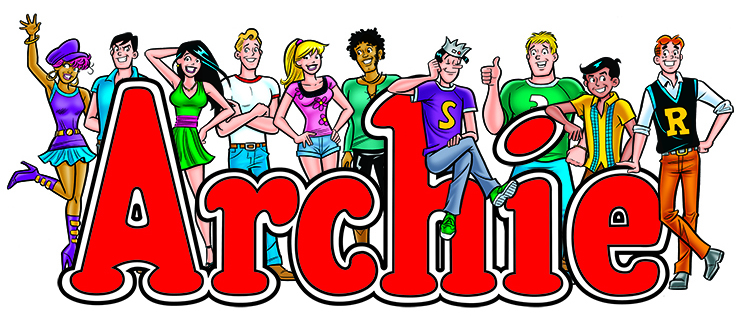
The harem genre isn’t really relegated just to the world of anime. Just to prove its potential innocence, Archie the most apple-pie-and-baseball thing in comics (until Superman, Captain America and Uncle Sam play a pick-up game with Babe Ruth and the Founders then sit down for ice cream and a slice of apple pie straight from Betsy Ross’s kitchen) bares enough of the essential traits to be considered a harem series. Three’s Company has an awful lot in common with the average harem show, and if it hadn’t stopped airing nearly a decade before the genre was really cemented, it could be considered a subversion of the form.
But I digress, let’s get back to Tenchi. He’s the protagonist of Tenchi Muyo!, a six-episode OVA from 1992 (that I overlooked during my history of anime). Tenchi Muyo! was one of the major players of the post-Akira anime invasion, along with series like Dragon Ball Z and Sailor Moon.
Tenchi Muyo! isn’t exactly the first harem anime, but it is the codifier. A series haremocity can probably be measured in degrees away from Tenchi Muyo!. But there are two important works from before Tenchi gained his harem that deserve a little attention.
Before Tenchi, there are two works by mangaka Rumiko Takahashi that provide a lot of the background for harem anime. Urusei Yatsura, created in ’78, is a major part of the history of two genres (we’ll get to the second one in another post). Like Three’s Company, Urusei Yatsura is like a deconstruction of the genre before it really existed. Protagonist Ataru does find himself with two women seeking his affection, but he’s a major pervert who wants a harem. The women aren’t having it.
The other series, Ranma 1/2 borrows from a lot of the same concepts as Tenchi. Thanks to the gimmick we mentioned earlier, Ranma has a male and a female harem. Unlike most harem shows though, Ranma has one true love interest he’s chasing. Ranma is also a very different protagonist, confident and brash as opposed to awkward and sensitive.
But I’m hesitant to over-define harem anime because so many tropes are take-it-or-leave-it. A harem protagonist can be cocky and hot-headed instead of thoughtful and caring. A harem can be wanted or unwanted. Harem shows can be slice of life or action-oriented. They can be sci-fi or realistic. The hero can have a primary love interest or they can all be equals. The harem can be aggressive and competitive or collaborative. Just about anything a harem can be, it can also be the opposite.
Over the past several years, there’s also been an uptick in a specific kind of harem show. Anime based on visual novels and especially visual novel dating games fit comfortably within the harem genre. While the dating games push players to pick one girl, the anime try to feature all of them, leading to a harem situation. While general harem shows may feature weird settings and fan service, these visual novel based games (like ISLAND) tend to double down.
It’s more of an undertaking than I have time for to try to detail all the possible stock characters and stories that crop up in harem anime. Seriously, check out the harem genre page on TV Tropes. Still, I’m going to try to create a solid list of harem character archetypes for tomorrow night’s post. Until tomorrow!
 chasetriesagain.com
1 Comment