
Back in 1997, Cartoon Network was just coming into its own. What a Cartoon! had just spun Dexter’s Laboratory into its own show the year before, and Johnny Bravo and Cow and Chicken would both debut that year. For a given value of “’90s kid”, this is probably the beginning of a golden age of cartoons and entertainment.
But in March of that year, Cartoon Network would take Moltar, a villain from the ’60s Space Ghost cartoon and make him the host of an action cartoon block, Toonami. It’s an interesting choice because at that point Moltar was probably better known as the producer of the off-kilter “talk show” Space Ghost Coast to Coast.
Back in ’97, Toonami’s first “anime” was Voltron, an American series loosely built from the anime Beast King Golion. Voltron aired alongside shows like the original ThunderCats and The Real Adventures of Jonny Quest, but in ’98, anime took over the block. Robotech, Sailor Moon, and Dragon Ball Z would all join the block that year.
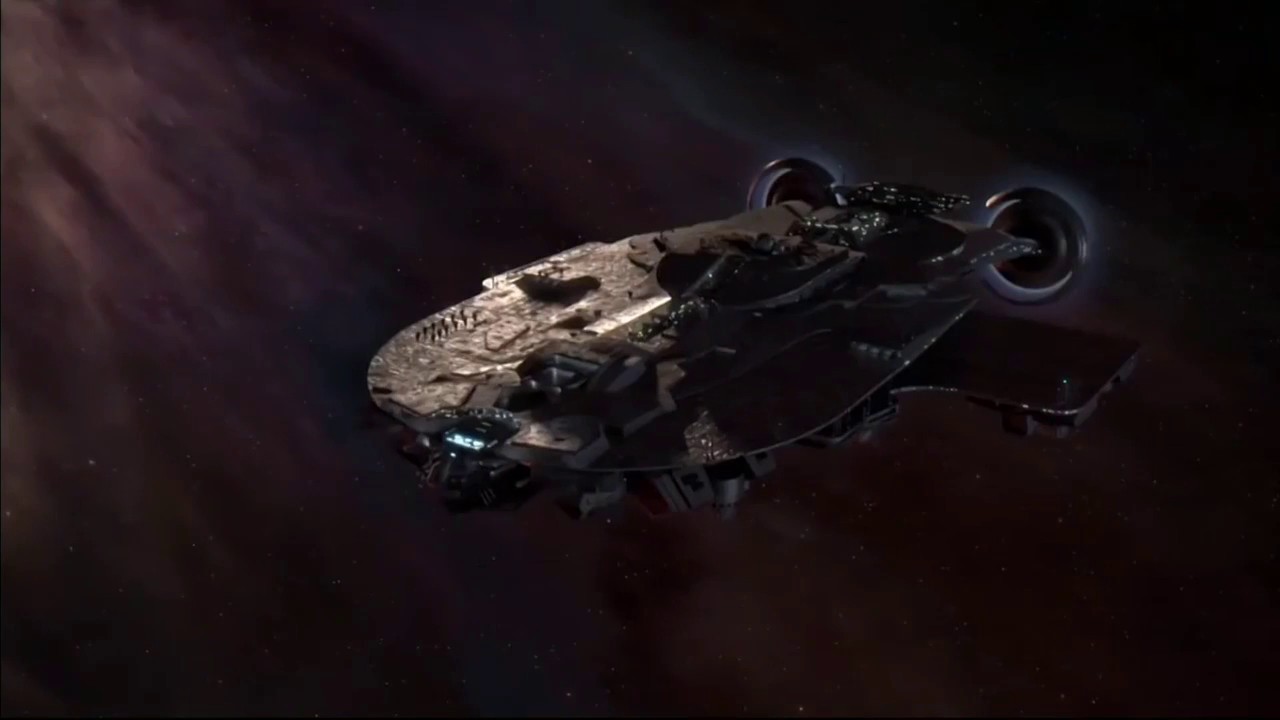
In ’99 the robot T.O.M., initially voiced by Sonny Strait before Steve Blum took over the role in 2000, took over from Moltar as host. T.O.M., his AI partner SARA, the spaceships Absolution and Vindication and their small supporting cast would develop into a complete self-contained universe through Total Immersion Events, stories about the robot host and his adventures in space.
I’ll abbreviate the history lesson from there. For a little over a decade, Toonami was the introduction to anime for just about every 20-something anime fan I know. Anime like Mobile Suit Gundam Wing, Ruoroni Kenshin and One Piece aired alongside quality American animation like Batman: The Animated Series, Star Wars: Clone Wars and Teen Titans.
Toonami survived a number of changes to its time slot, including a disastrous expansion on Kids’ WB. It thrived off developing its look and its line-up until both took a series of very unpopular turns resulting in its 2008 cancellation.
In 2012, Toonami came back thanks to support inside and outside Cartoon Network and a clever April Fools joke. The revival would replace the Adult Swim anime block on Saturday nights, initially carrying over much of its line-up. Nu Toonami has featured the premiere of a co-production with Production I.G., IGPX and the premiere of Space Dandy, the first anime to air in the U.S. before it aired in Japan. Love it or hate it or disregard it, Space Dandy is a key component in the creation of the modern seasonal anime structure, kick-starting Funimation’s simuldubs.
But that’s just the history. You can find that on Wikipedia. (I did.) I think it’s pretty obvious, without me going to great lengths to explain it, why Toonami would be important to fans of a certain age, but I think it’s worth looking at why it’s still going strong.
I think the most straightforward answer is that it’s probably serving as that all important gateway for new fans. If you’re 13 and your parents have cable, you’ve probably got access to Toonami. You probably have Netflix, too, but Toonami has things Netflix doesn’t. They’re in English, and they’re brand new to you. If my experience with kids in that age range holds true, you’re also less likely to know where to find this anime stuff because there’s so much else already readily available that the hunt for the good stuff isn’t really necessary.
The other answer I think pairs nicely with the first. Toonami has (almost) always served as an excellent curator of anime and action. Toonami presents its programming like it matters, like it has value. And it handles that presentation with style and gravitas that no other cartoon block has ever had. It’s something that’s desperately missing in the world of streaming anime. No, we don’t need a CGI robot voiced by a legendary VA to tell us what anime too watch, but it takes a lot of reading in message boards and trial-and-error to know what’s really good these days.
See, it’s easy enough to jump on Attack on Titan or My Hero Academia because they’re popping up online if you show even the slightest interest in anime. But titles like Megalo Box and Hinamatsuri had to be recommended to me. Even browsing Crunchyroll, when I jumped back into anime in spring I wouldn’t have immediately gone for those titles.
Having someone do some of the picking for you has value, especially when you have limited time or experience. Having someone with reliable taste tell you “Hey, this is going to be a good show.” or “We’re not airing that because you won’t like it.” can be worth the commercial breaks. I think there’s an interesting space for some hand-picked lists like that in the streaming world where shows may be presented totally without context or thrown at you based on algorithms.
Anyway, to hear some of what I’ve been getting add said clearly and with some style, check out this YouTube video I found while doing research. Until tomorrow, Toonami Faithful.
 chasetriesagain.com