

It is the dawn of a new millennium. Japan is still struggling to recover from the economic downturn of 1992. Anime has recovered from its early ’90s stumble and has exploded in popularity in America.
 It has been easy, so far, to characterize each decade through innovations, revolutions and landmarks in the industry. The ’60s saw anime come to television, the ’70s saw the birth of an auteur movement, the ’80s were a golden age that realized the potential of the medium up to that point, the ’90s faltered and then began to deconstruct what had come before. All throughout this timeline, we’ve seen anime in America go from a few heavily modified series and backroom view parties to an exciting phenomenon.
In America, the ’80s and ’90s saw animation come into a sort of cultural renaissance thanks, in part, to the influence of Japanese exports. Anime and animation at the turn of the century are in full bloom.
There are plenty of companies importing anime as fast as they can. They’re tearing through three decades of Japanese animation, first in VHS and then in DVD. The market is hungry for it. Sometimes the localizations are terrible, like the 4Kids dub of One Piece. Sometimes they’re works of art that challenge the Japanese original, like Cowboy Bebop.
But looking back on the decade from 2000 to 2009, I find it hard to characterize. In research and recollection, I’ve been able to find a theme or a central action for nearly every moment in anime’s history. For the ’00s, though, there’s just white noise.
Following the successes of the late ’90s, there’s a huge increase in numbers of anime produced per year. If Anime News Network’s encyclopedia is reliable and my calculations are accurate, things began to trend upward in ’96. In ’99 there were 116 shows and movies. 2000 dropped to 92, but things picked back up with 131 in 2001. And the trend has been mostly upward from there with only a small, though prolonged dip after the ’00s peaked in 2006 with 216 new series.
That’s not to say there weren’t trends or important shows and changes. There were, but much of what came about in the ’00s was the end result of nearly 40 years of development. But perhaps it’s simply too close to make out the overall patterns just yet.
 Evangelion sparked a mecha revival with shows like Eureka Seven (2004), Code Geass: Lelouch of the Rebellion (2006), and the seminal Tengen Toppa Gurren Lagann (2007). Following One Piece’s lead in 1998, the ’00s would see Naruto (2002) and Bleach (2004) make their way to television. All three series are based on Weekly Shonen Jump‘s “Big 3,” the most popular shonen manga of the time.
Wikipedia characterizes this as a period when lots of manga were turned into anime. That’s a bit like saying it was a period when lots of fish swam in the sea. Manga and anime have a relationship that predates Astro Boy, but there were certainly quite a few prominent adaptations. Shows like Death Note, Full Metal Alchemist, Mushishi, and many, many others would join Bleach and Naruto.
The ’00s would also see visual novel adaptations like CLANNAD and Fate/stay night and light novel adaptations like Full Metal Panic! take off.
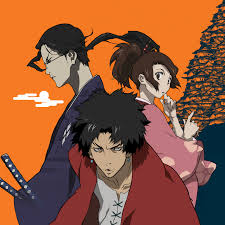
There are honestly more influential titles during this period than I think I can list or make nice, sensible patterns of cause and effect with. This decade saw Fruits Basket, Hajime no Ippo, Ghost in the Shell: Stand Alone Complex, .hack//Sign, Yu-Gi-Oh!, InuYasha, Samurai Champloo, Bakemonogatari, Black Butler, Sword of the Stranger, Baccano!, Afro Samurai, Black Lagoon, and that really is just a small selection. There were three Pokémon movies in 2000. Three of them.
 Fuji TV’s noitaminA block got its start in 2005 with anime targeted outside the usual demographics. Among the more high profile shows on the block during this time period were Honey and Clover and Eden of the East.
In the States, the anime craze died down over the course of the decade, but it didn’t die out. While Streamline Pictures, a distributor largely responsible for the boom, shut its doors in 2002, the trend rolled on. Until late in the decade, anime was still prevalent on kids’ blocks and Cartoon Network. Even after Toonami first ended in 2008, Adult Swim Saturday nights were still dedicated to anime. When anime couldn’t be found on TV or in stores, fans turned to the Internet where questionably legal streaming sites began to pop up, like Crunchyroll in 2006.
Of the 79 North American anime conventions listed on Wikipedia, 47 of them were founded between 2000 and 2009. By 2010, all but nine states had an active anime convention.
American animation itself was entering the latter half of what has been called an animation renaissance. Thanks in part to the influence of anime on audiences and animators beginning in the ’80s, American audiences were taking animation seriously for the first time since the ’50s. The ’00s saw American cartoons like Samurai Jack, Avatar: The Last Airbender and The Boondocks debut with a distinctive anime influence on visual and storytelling styles.
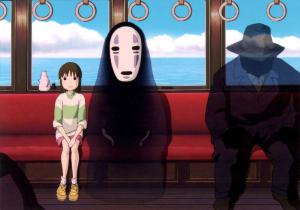 Hayao Miyazaki would direct three films during this decade. Spirited Away (2001) was the second film he thought he might retire on. It won Best Animated Feature at the 75th Academy Awards and was the first and only hand-drawn foreign film to do so. I still have my DVD copy of Spirited Away released by Disney with an intro from Pixar’s John Lasseter telling viewers how lucky they are to see the film. Following Spirited Away, there was another period of great success in anime films
Miyazaki’s second ’00s feature was 2004’s Howl’s Movie Castle. Originally meant to be directed by Mamoru Hosoda, Miyazaki was given the project when Ghibli couldn’t reach an agreement with Hosoda. Hosoda would direct 2006’s The Girl Who Leapt Through Time and 2009’s Summer Wars during this period.
Miyazaki’s final film of the decade was 2008’s Ponyo, the first that I can remember being actively advertised in the U.S.
Satoshi Kon made his directorial debut with 1997’s Perfect Blue, but most of his mind-bending oeuvre was created during this decade. Kon would create Millennium Actress, Tokyo Godfathers, Paranoia Agent, and Paprika before his untimely death in 2010.
While new distributors were still getting a foothold, older distributors began to die out in the late ’00s. They had mostly run through the most profitable parts of the Japanese back catalog, and disputes over pricing and an uptick in illegal streaming were beginning to cull the herd.
In 2005, YouTube opened shop. Crunchyroll appeared the following year. Netflix and Hulu both got into the streaming video-on-demand game in 2007. In 2009, Crunchyroll had reached agreements with several Japanese companies and announced it would no longer support illegal streaming. I’m not sure any of us believed it would work. We were wrong.

 chasetriesagain.com
I really need to get a Crunchyroll sub. Thanks for these posts, they’re very informative.
LikeLiked by 1 person
Thanks! I’m glad you’re enjoying them. I’ve learned a ton doing the research.
LikeLike