
“Today, animation in Japan is considered to be in a creative doldrums. Due to the sheer volume of the output over the past three decades, the good ideas have ‘all been used up.’ The current trend is for OAV remakes of anime favorites of 20 or 30 years ago, featuring a flashy ’90s art slant and a more ‘sophisticated’ (cynical) story line–very similar to the American trend for turning classic live-action TV series into big-budget theatrical films. But many of the titles and concepts that are stale in Japan are still fresh to American audiences, so anime still has an encouraging growth period ahead of it in the US.” – Fred Patten, circa 1996
I just broke almost every rule about quotes I learned in journalism school and a few I made up myself. I’ve spent a lot of time reading about ’90s anime to prep for this post, and I haven’t found a better way to talk about the early ’90s.
Fred Patten wrote that in an article from around 1996 about the history of anime. Patten is one of the founders of anime club Cartoon Fantasy Organization and a fixture of American nerd culture, integral to the eventual anime boom in the U.S.
He’s mostly right about the anime of the early ’90s, even with 22 years worth of perspective. The Japanese economic bubble burst in ’92, and all of Japan experienced a down turn. Take a look at TV Tropes list of titles from ’90 to ’94. For the most part, you’ll find the most noteworthy works are from long-running franchises like Mobile Suit Gundam, Lupin III, and JoJo’s Bizarre Adventure.
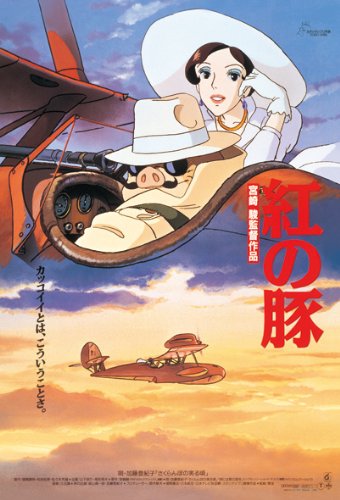 As if striving for one last gasp of the passing era, ’92 itself is a noteworthy year. Crayon Shin-chan, a long running series about a kid and his family that is often more adult than audiences might expect, made the jump from manga to anime thanks to Shin-Ei Corporation, a descendant of Toei. Ghibli released Miyazaki’s Porco Rosso about an ace pilot with the head of a pig. Sailor Moon and YuYu Hakusho both made it to television.
After that, things tone back down. There are shows and movies, but little that, at least to my eye, seem landmark. This is an era where fans knew what had to be seen. They were countable, list-ready collections of the “best stuff.”
So let’s go back to 1981. There’s an event called Daicon III. It’s the 20th Annual Japan National SF Convention. There are seven young animators, and they’ve produced something just for Daicon. It’s a rough animation about a girl in a bunny suit fighting her way through a series of famous villains, robots and spaceships to fly away on a daikon radish. In 1983, they do it again, but they do it better. In 1984, they’re Daicon Films. In 1985 they’re Gainax.
A decade passes. Gainax is struggling as always, but they’ve produced founding member Hideaki Anno’s Neon Genesis Evangelion. For Gainax and for anime, things are about to change. Evangelion was a wildly controversial success. It was so successful that two members of the studio were eventually jailed for accounting fraud.
 I’m not sure what to say about Evangelion. I haven’t seen all of it nor most of it nor have I watched very much of it in sequence or in full episodes. I have talked about it with friends and read about it online, and based on what I have seen, I’m not sure I like it, that anyone likes it. I’m not sure it’s meant to be liked, just experienced.
It’s esoteric. It’s graphic. It is, at times, deliberately, painfully unpleasant. Evangelion would cause TV Tokyo to begin censoring anime for portrayals of violence and sexuality.
I’ve said before on this blog that I know enough about Evangelion not to condescend to my readers and pretend I can explain it. Allegedly, Anno intended it to revive the industry. Allegedly, Anno also intended to critique the fans. Allegedly, a lot of things.
Evangelion was a jolt of energy for a fading industry. It created a new sub-subgenre of the mecha variety featuring partially organic robots. But it wasn’t the only anime in ’95 to make a step in the right direction.
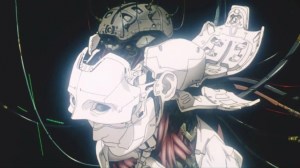 Ghost in the Shell is a film by Production I.G. Based on a manga by Masamune Shirow, Ghost in the Shell follows a cyborg public-security agent hunting down a hacker terrorist in the future of 2029. The cyberpunk thriller would be the first in a long series of anime adaptations of Shirow’s work. Its discussions of consciousness and humanity in a digitally linked, technologically-advanced world would influence sci-fi in Japan and the West, directly influencing The Matrix.
In 1997, Miyazaki and Ghibli released Princess Mononoke, and this would be the first time Miyazaki considered retiring. In ’85, Miyazaki’s Nausicaä of the Valley of the Wind was dubbed and released as Warriors of the Wind by New World Pictures. They cut 22 minutes from the run-time and radically changed the work. After that, Miyazaki adopted a policy of not allowing cuts when his movies were localized. When Harvey Weinstein suggested edits to make Mononoke marketable, he received a katana from Toshio Suzuki with a message reading “No cuts.”
Back in ’94, animator Shinichirō Watanabe made his directorial debut working as co-director on Macross Plus. Four years later, he would set out to create a work I continue to attempt not to discuss, Cowboy Bebop. When it first aired, TV Tokyo, still reeling from Evangelion, censored it heavily. This seems odd to me, even trying to get my head around their mindset in the moment. Bebop had a calm, detached approach to emotional highs and nostalgia that is hard to pull off without being remote.
Bebop, along with Evangelion and Ghost in the Shell, from three years earlier, would shift anime fundamentally. They were more cerebral, more auteur, more coolly adult. In a Japan struggling economically and an America struggling with its identity, these anime were going to hit home.
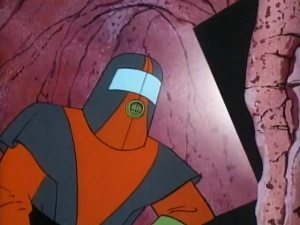 But let’s talk about America. In 1991, anime fans gathered in San Jose, California for AnimeCon, the first anime convention in the States to surpass 1,000 attendees. In 1992, Cartoon Network is born. At first, Cartoon Network survived on a diet of reruns of classic cartoons from the U.S., but in ’97 they launch the Toonami block with Moltar of Space Ghost as fictional host. The block includes American action cartoons as well as shows like Sailor Moon and Dragon Ball Z. For many fans currently in their 20s and 30s, Toonami was their introduction to anime.
The Pokémon craze would sweep through America in the late ’90s, adding a multiplier to the situation by giving elementary schoolers yet another gateway to anime.
 Meanwhile, companies launched throughout the late ’80s and into the ’90s are importing as much as they can as fast as they can from Japan’s vast back catalog. Rightstuf, Streamline, Central Park Media, Media Blasters, VIZ, Urban Vision, AnimEigo, AD Vision, Manga Entertainment and other companies besides are all turning anime into cash through the home video market with expensive VHS tapes.
As the market for anime grows, the places for it on American television do as well. In the late ’90s and early ’00s, anime pops up on television blocks for kids and adults. The Sci-Fi channel had a dedicated anime block, anime makes its way to Adult Swim and it also begins cropping up on kids’ blocks like Kids’ WB and Fox Kids. Meanwhile, the Internet becomes increasingly ubiquitous and streaming video and its possibilities are just around the corner.
In 1995, two decades after the launch of Betamax and VHS in Japan, a coalition of tech companies would hash out an agreement to use a single, unified format for recording video on disc. DVD won out, and another shift in how anime was consumed was on the horizon.
 chasetriesagain.com