

Group TAC’s Space Battleship Yamato did not take the world by storm when it first aired in 1974. But in 1977, Star Wars came to theaters around the world, igniting a hunger for sci-fi in audiences. Later that same year a film adaptation of Yamato came to Japanese theaters. Critics were skeptical, but the theatrical run would surpass Star Wars in the Japanese box office. Five years later, Mobile Suit Gundam would be condensed into theatrical releases, and the Second Golden Age of Japanese Cinema would begin.
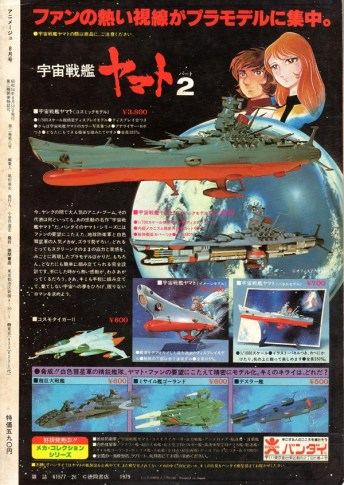
This period would also see the beginnings of what would become Japan’s otaku culture. The term otaku began as a Japanese honorific, but today it means, essentially, a nerd with an intensely focused interest. There are some heavy negative connotations in Japan, but U.S. fans use the term positively. Magazine’s like Tokuma Shoten Publishing’s Animage helped popularize the hobby.
Meanwhile across the Pacific, there was a lull in the import of anime to the United States during the ’70s. Animation aficionados were still interested and anime fandom got its start as clubs like the Cartoon Fantasy Organization in California took off. Clubs like this would get their hands on the anime available to them and screen them at meetings using reel-to-reel projectors.
In the late ’70s and early ’80s, localization to the U.S. would begin to pick up steam again. Tatsunoko Production’s Science Ninja Team Gatchaman, would be adapted into Battle of the Planets in ’78, and Yamato became Star Blazers in ’79. In 1985, Carl Macek and Harmony Gold USA would make an interesting decision. They wanted to localize and distribute an anime for syndication in U.S. markets, but syndication required 65 episodes minimum and the shows available to them were too short.
Instead, Macek adapted three Tatsunoko shows into one; Super Dimension Fortress Macross (1982), Super Dimension Cavalry Southern Cross (1984) and Genesis Climber MOSPEADA (1983). These three shows would be combined into Robotech, an original series using the old animation. Honestly, I’m not sure if that counts as anime anymore. The animation is from an anime studio, but so are parts of some Rankin/Bass movies. But that’s a debate for another time. Robotech worked, and in 1988 Macek founded Streamline Productions and began importing anime to the States on his own.
The most important thing Streamline did is not up for debate or reconsideration. The same year Macek and Jerry Beck founded the company, Akira would debut in Japan. Akira is weird. It’s intense. It’s occasionally aggressively ugly, and it’s a post-apocalyptic vision that would not have been made in America of 1988.

Based on the manga by its director, Katsuhiro Otomo and produced by TMS Entertainment, Akira had a $10 million budget, making it the most expensive anime of its time. Legend has it that George Lucas and Steven Spielberg called Akira unmarketable, but Streamline engineered a limited theatrical run in the U.S. in 1989. Akira changed the world of anime outside Japan. This is not what animation was for U.S. audiences, and the groundswell of anime fandom began to grow exponentially.
But Akira wasn’t the only thing Macek and Beck would bring stateside. They also brought a few things from two names that have been cropping up since 1964.
In 1984, Hayao Miyazaki would direct Nausicaä of the Valley of the Wind. Longtime collaborator Isao Takahata would produce, and financial support would come from Tokuma Shoten. Nausicaä was based on Miyazaki’s manga, which ran in Animage from 1982 to 1994. Animated by Topcraft and distributed by Toei, this is how Studio Ghibli starts.
The following year, Miyazaki and Takahata along with Animage editor Toshio Suzuki and Tokuma Shoten founder Yasuyoshi Tokuma created Ghibli. The name comes from an Italian word for a hot, desert wind, and Miyazaki picked it because he wanted to blow a new wind into animation. He chose well.
Inspired by the success of Nausicaä, a period of experimentation in anime films began eventually leading to Akira. Gisaburō Sugii of Group TAC would create Night on the Galactic Railroad in 1985, based on a 1927 Japanese novel. In 1987 Sugii would direct an adaptation of the classic Tale of Genji. Studio Ghibli would also get in on the adaptations with 1988’s Grave of the Fireflies, based on 1967 Japanese novel. Elsewhere, a group of college kid animators had turned their convention hobby into a full-fledged studio called Gainax, and they’d been given the opportunity to animate one of the most expensive movies of the decade, Royal Space Force: The Wings of Honnêamise.
 Meanwhile on television, 1983 saw Tsuchida Productions release Captain Tsubasa. The show was based on Yōichi Takahashi’s manga of the same name, which started running in Weekly Shonen Jump in 1981. Captain Tsubasa would essentially create the sports anime. Another Jump title, 1984’s Dragon Ball by Akira Toriyama, would be adapted by Toei beginning in 1986. Toei would also bring Jump manga and archetypal shonen series Fist of the North Star to television in 1984 and to the big screen in 1986.
Thanks to the growth of home video since the mid ’70s, an entire format became possible with OVAs. Original Video Animations are essentially direct-to-VHS without the stigma and mediocrity. Without the regulations of network television to hamper them, animators went wild. Shows like mecha series Patlabor got their start as OVAs, but OVAs also allowed for an incredible variation in style and content. OVAs could be violent and graphic in ways that TV and film wouldn’t allow. They could also be openly pornographic, leading to the first true pornographic anime in 1984.
Ghibli and Gainax are now on the board. Akira didn’t do well at home, but it’s about to change how the West views anime. You can watch your favorite show on demand if you’ve got a VHS player, and sports anime and fighting anime are on TV. But the road is about to get rocky. The late ’80s and early ’90s see Japan experience an economic downturn. The next two decades will come to be known as the Lost Score as Japan struggles to get its feet back under it.
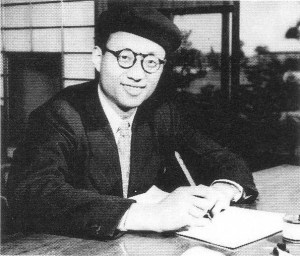
On February 9, 1989, Osamu Tezuka, the “God of Manga” and the founder of Mushi Productions, would succumb to stomach cancer and die. As a child, Tezuka was torn between becoming a doctor and becoming a mangaka. “You should work doing the thing you like most of all,” his mother said. Tezuka earned a medical degree, but it was manga that he would make a career of. The day of his death, a nurse tried to take his drawing equipment away from him. His last words were “I’m begging you, let me work!”
 chasetriesagain.com