
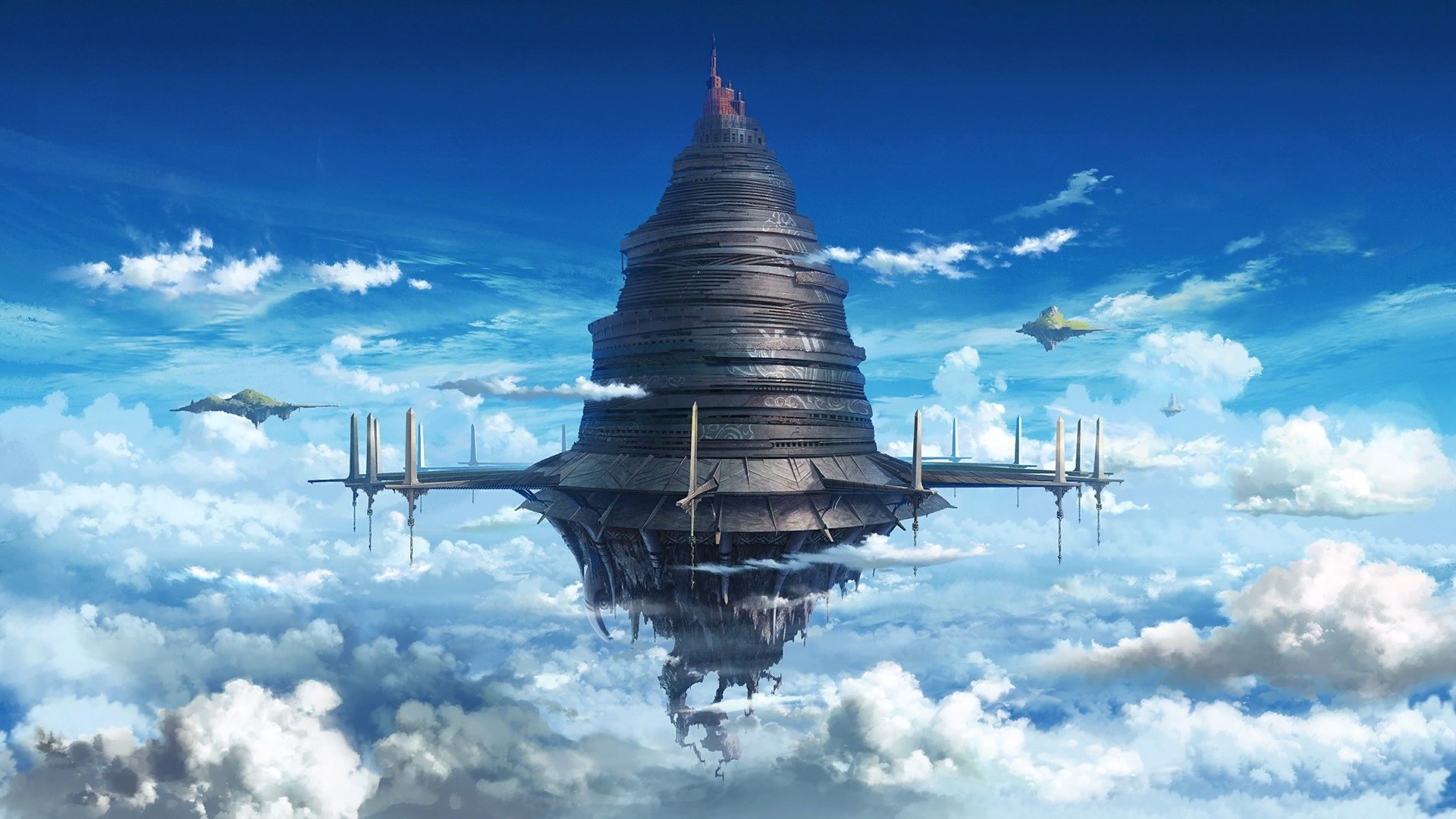
The premise is fairly simple. Our protagonist is stranded in another, innately magical world. I don’t think anyone reading this is going to be unfamiliar with the basic concept. It shows up a fair bit in iconic Western literature directed at children. The Wonderful Wizard of Oz, Alice in Wonderland and The Chronicles of Narnia all share this premise.
This trope is used pretty broadly in anime where it has gained the name isekai. Isekai translates to “different world.” In a bit, I’m going to argue that what most anime fans think of when we talk about isekai now is a really distinct subgenre, but let’s cover the basics first.
Our protagonist or protagonists are trapped in another world. This world is almost guaranteed to have some degree of magic. It might be a spirit world of some sort or simply a Narnia-esque alternate reality. It could be that our heroes have been literally trapped inside a virtual reality world, but they may have been transported to a “real” world that is remarkably similar to a video game they’re familiar with.
Most of these series revolve around the heroes trying to get back to the real world while also helping the world they’re stranded in as best they can. Usually this journey revolves around some degree of self-realization, and our main characters return to the real world more confident and ready to deal with the challenges at home.
I’m imposing a couple of limitations based on discussions of isekai that I’ve seen around the web. This does not include being stranded in another time or on another planet. If all the main characters are able to freely enter and exit the other world, this isn’t isekai either. It’s also worth noting that some series may have an isekai arc, but this doesn’t make the whole show an isekai show.
So let’s talk examples. Studio Ghibli’s 2001 film Spirited Away follows a young girl called Chihiro who is trapped in a bizarre spirit world and finds herself working at a bath house while she tries to save her parents who were both turned into pigs because they ate the wrong food.
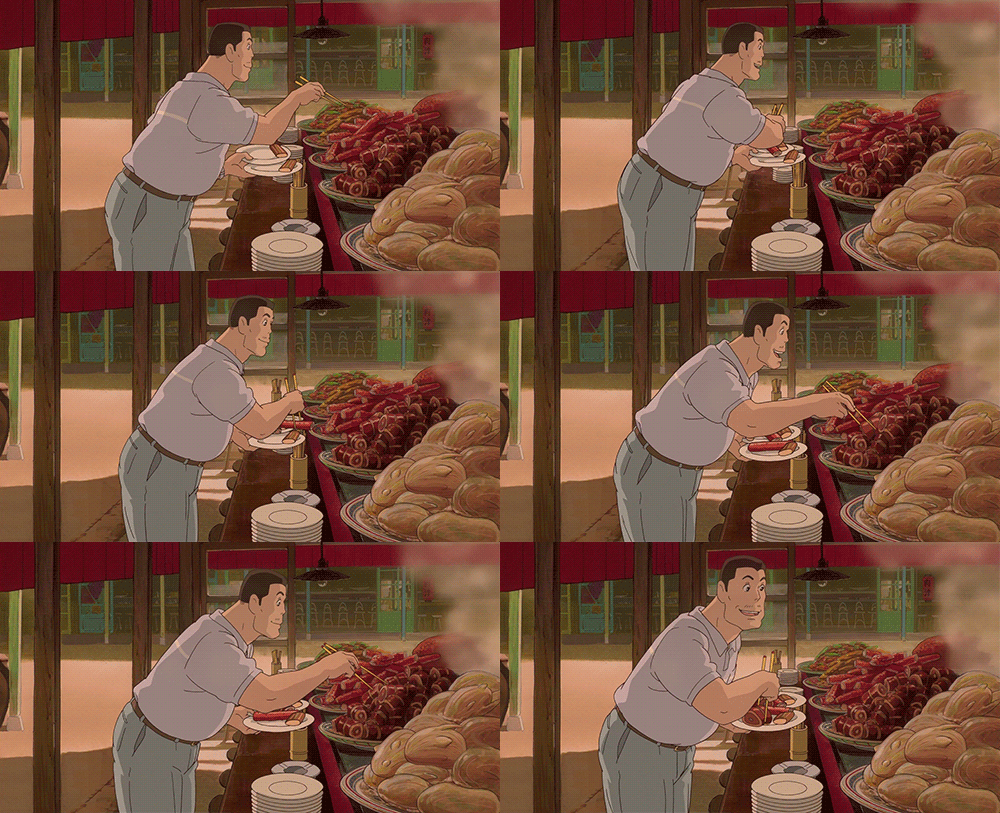
Spirited Away was my introduction to Ghibli and to Hayao Miyazaki, who we’re certainly going to discuss at length later. As a kid who was already a little obsessed with the “other world” concept in Western works, Spirited Away caught my attention in a big way.

From around the same time we got .hack//SIGN. Debuting in 2002, .hack//SIGN follows a teenage boy who wakes up trapped in an MMORPG known as The World. .hack//SIGN would launch the .hack franchise of books, shows and video games. Like with a lot of franchises that feature an isekai element alongside digital worlds, not all the material within the franchise actually fits the genre.
Speaking of digital worlds, a certain monster collecting franchise from the late ’90s also qualifies as isekai. That’s right, Monster Rancher. Protagonist Genki Sakura is awarded a beta copy of an in-universe game for winning a video game tournament. And promptly gets sucked inside the game alongside his roller blades when he turns it on.
While we’re on the subject of collectible monster anime, there’s another prominent one that features isekai. Yu-Gi-Oh! features two arcs where the cast is trapped in a video game, and the spin-off Yu-Gi-Oh!: Capsule Monsters has a similar premise.

Now let’s dig into that subgenre I mentioned earlier. Beginning with the 2012 debut of the Sword Art Online anime, there’s been a massive trend of a very specific sort of isekai story.
The other world is almost always an actual virtual reality video game or is remarkably similar to a video game. The protagonist is inevitably a guy without much going for him in the real world whose video game skills make him the greatest warrior in the setting. There’s usually a harem of some sort, a very attractive female deuteragonist, and a bevy of sidekicks to talk about just how great our hero is in every conceivable way.
Most of these shows are based on light novels, and most of them seem to catch a lot of flack stateside. The protagonists tend to be flat, and consensus points to the shows being very derivative. For the record, only the first arc of Sword Art Online meets my criteria for isekai. Further arcs (and spin-offs) no longer have the essential “trapped” component. I am told that Re:Zero is a good deconstruction of this part of the genre.
This trend is pretty big right now. Three of the new shows on Anichart for summer season are based in isekai light novels. Here’s a list of 58 isekai shows, with 27 of them coming after SAO. While this isn’t necessarily a huge number of shows, many of them hew so close to the same synopsis, they become difficult to distinguish.
That about wraps up tonight’s post. Should you find yourself whisked away to another world, you might find this PSA helpful. Until tomorrow.
 chasetriesagain.com
1 Comment